Pipelines and Workflows
Pipelines and workflows both describe how data moves through Rhombus, but they refer to different levels of complexity.
Pipeline
A pipeline moves data through a linear sequence of stages. Each node leads to the next, so you can follow every transformation from start to finish.
Workflow
A workflow can coordinate a more complex process. It may contain multiple pipelines, branches, merges, and parallel operations, giving you more control over how data moves.
A pipeline is a subset of a workflow. One workflow can contain several interconnected pipelines for more sophisticated data processing.
How They Fit Together
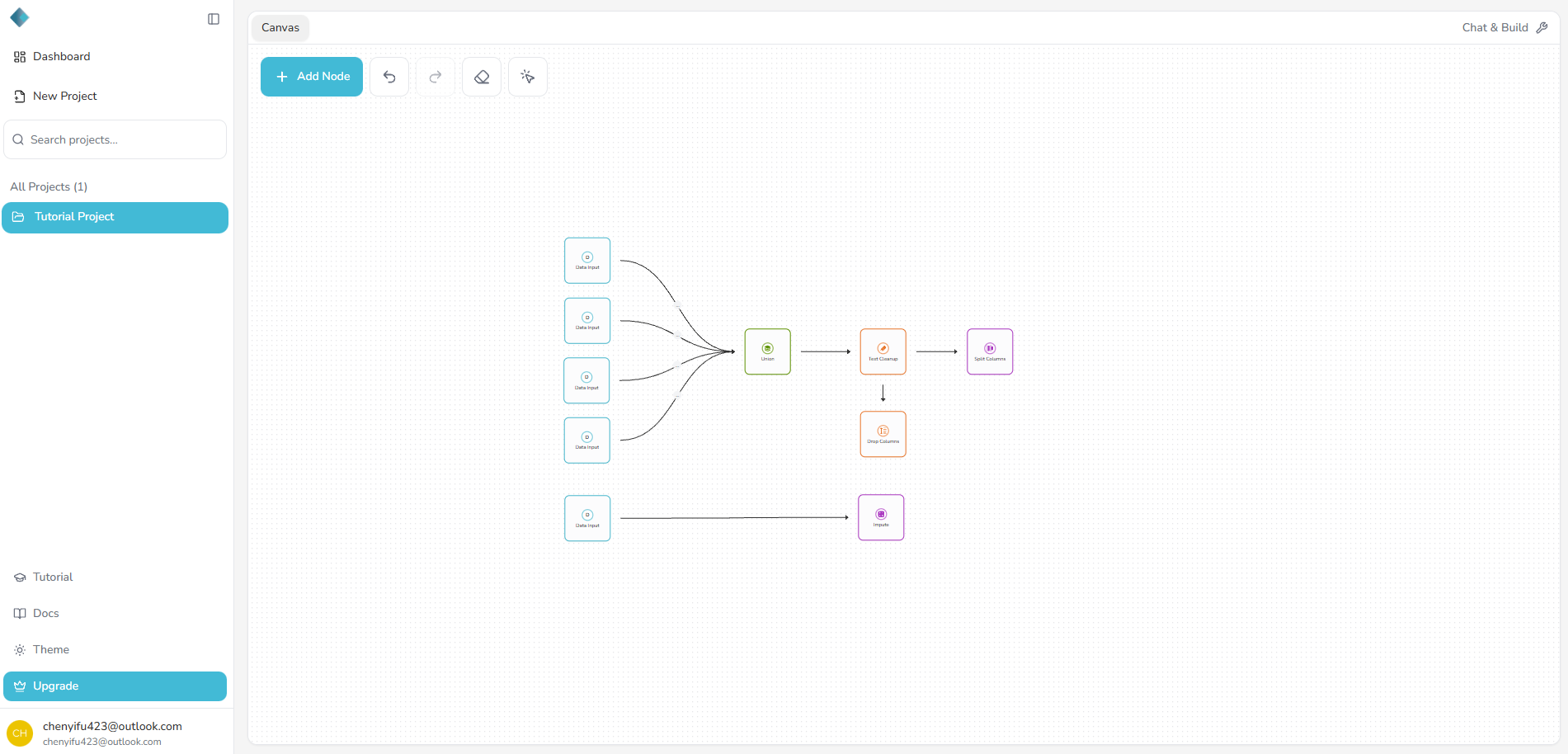
The diagram shows both structures:
-
Workflow with Multiple Pipelines: The upper section contains two pipelines that branch after the data cleanup stage.
-
Simple Pipeline (also a Workflow): The lower section follows a single linear sequence. This pipeline is also a basic workflow.
For a workflow with multiple pipelines, check the data flow between stages and configure every branch correctly to prevent errors.